Home/Visarocraft
Home/Visarocraft
1. Intro
2. My Role
3. The Solution
4. The Process
5. Lessons Learned
Intro
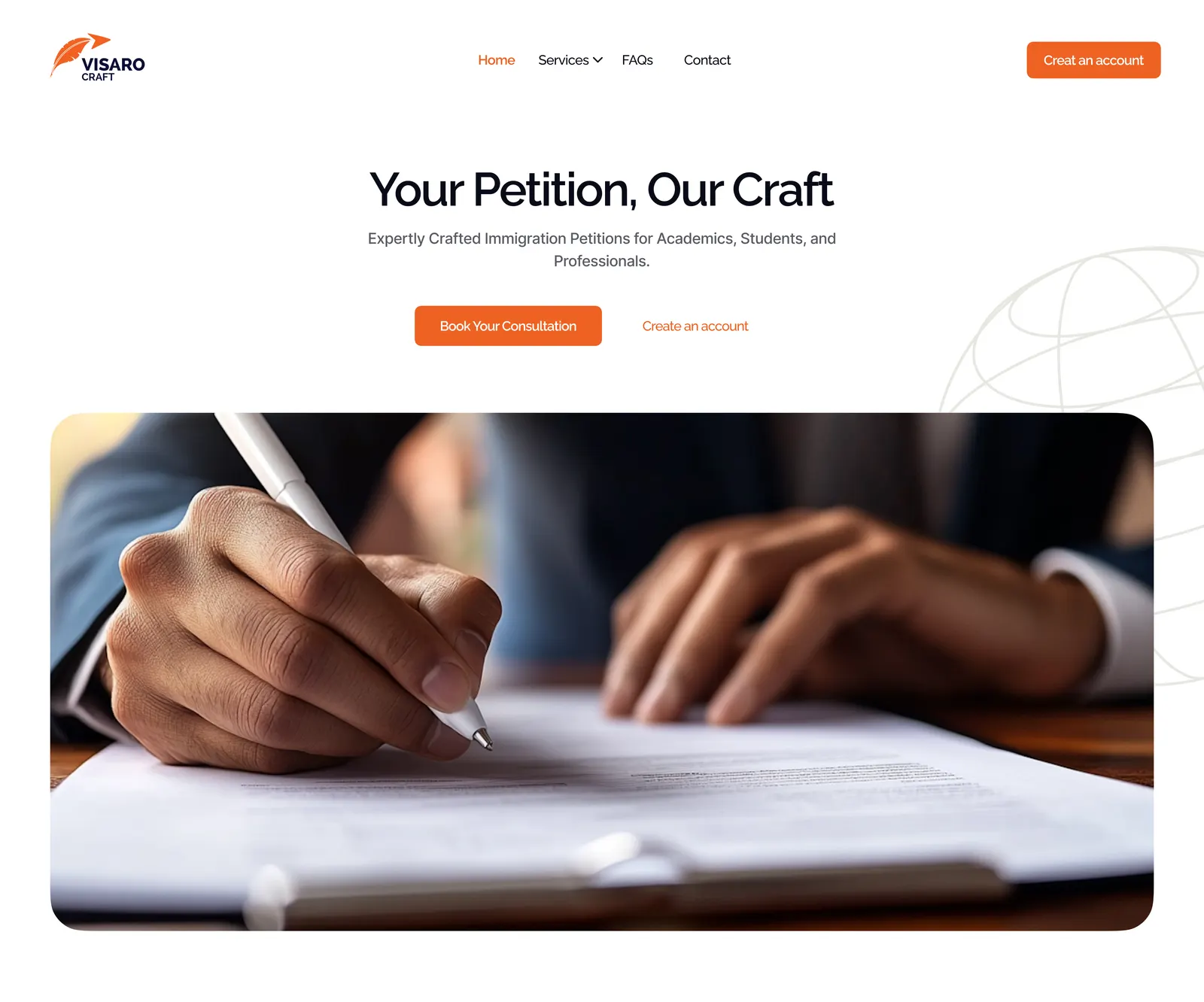
Visarocraft is an immigration success platform built for professionals, academics, and entrepreneurs pursuing EB1A, EB2-NIW, and O1 visa petitions — visa categories reserved for individuals who can demonstrate extraordinary ability or national interest. The platform brings structure to a process that's usually scattered across emails, spreadsheets, and PDFs: a user portal for applicants, an agent workspace for the professionals guiding them, and an admin dashboard tying case tracking, document handling, and petition progress together from intake to filing.
My Role
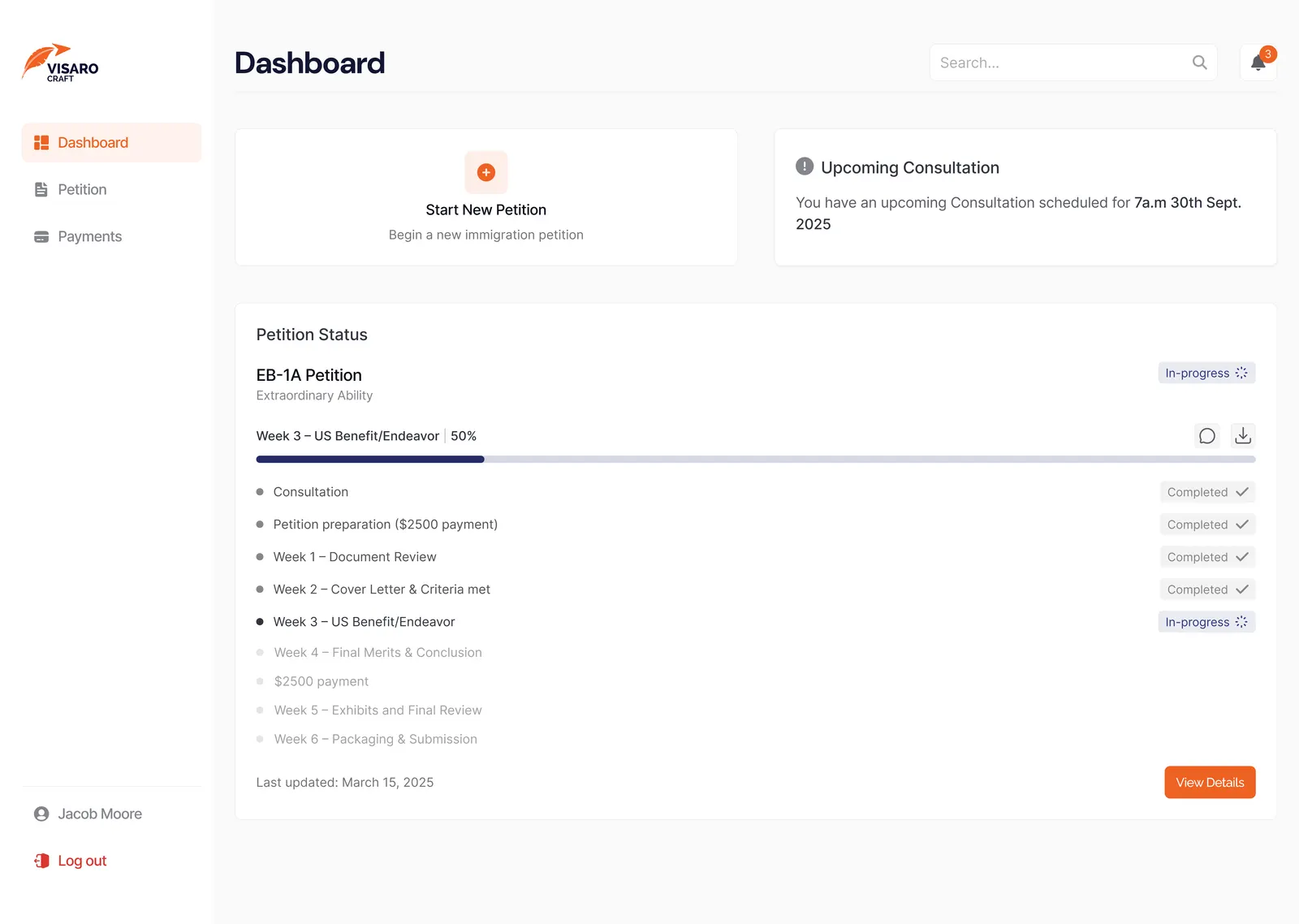
I worked on the frontend, translating the product's core workflows — case tracking, document uploads, petition status, consultations — into interfaces for two very different users: the applicant checking on their petition, and the agent managing a full caseload. That meant building components that could flex across both contexts without duplicating logic, and keeping the interface calm and legible for a process that's already stressful enough on its own.
The Solution
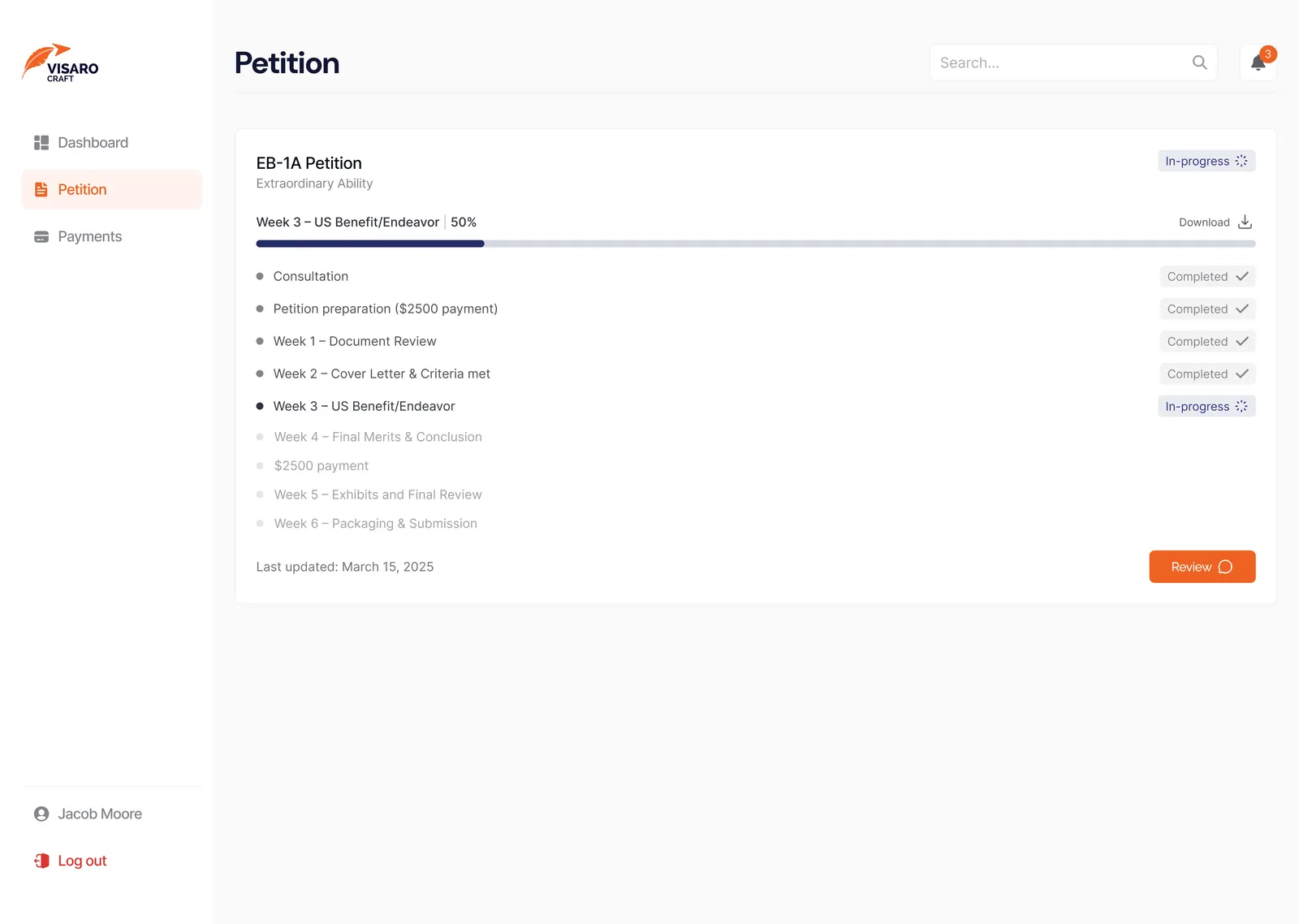
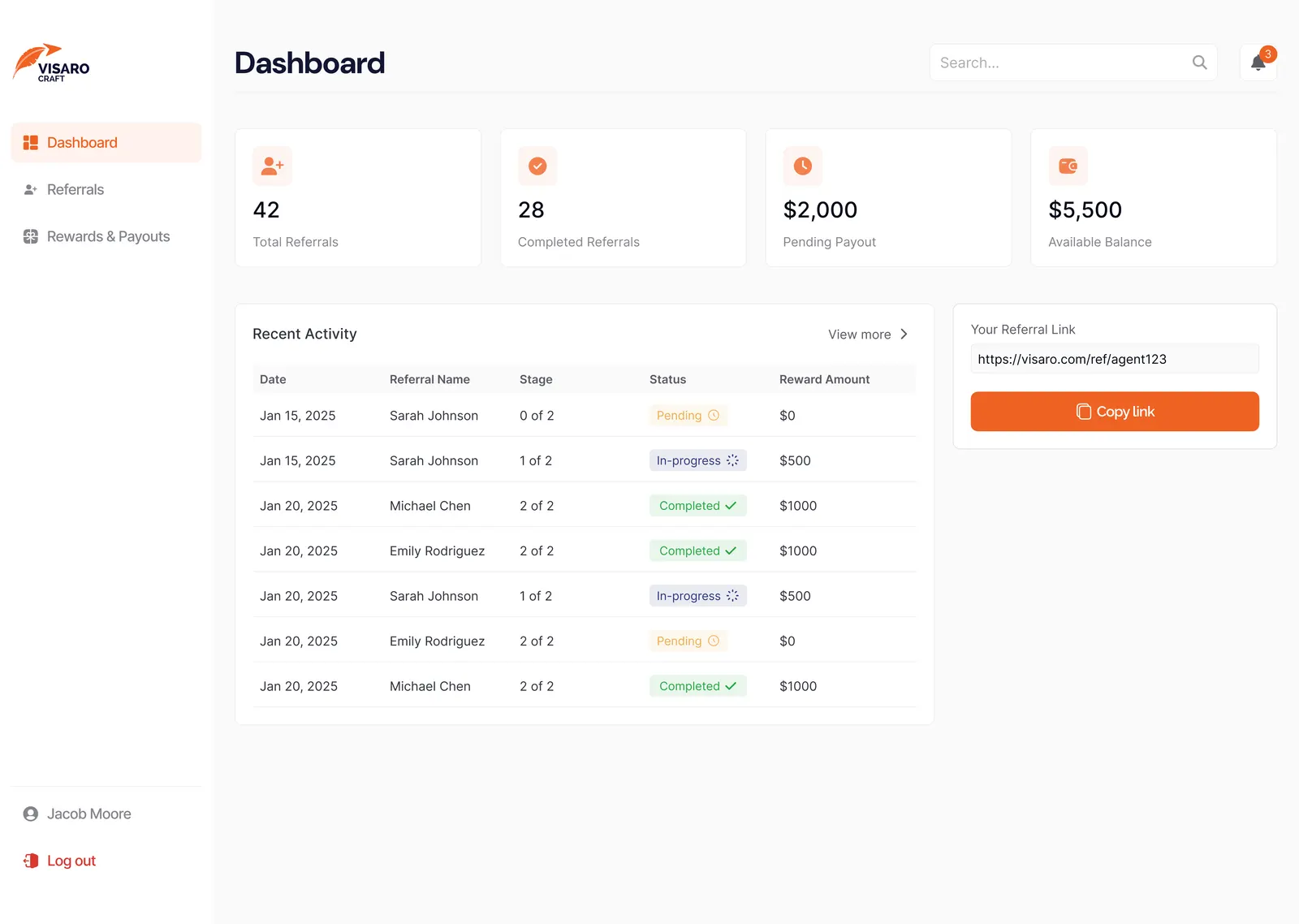
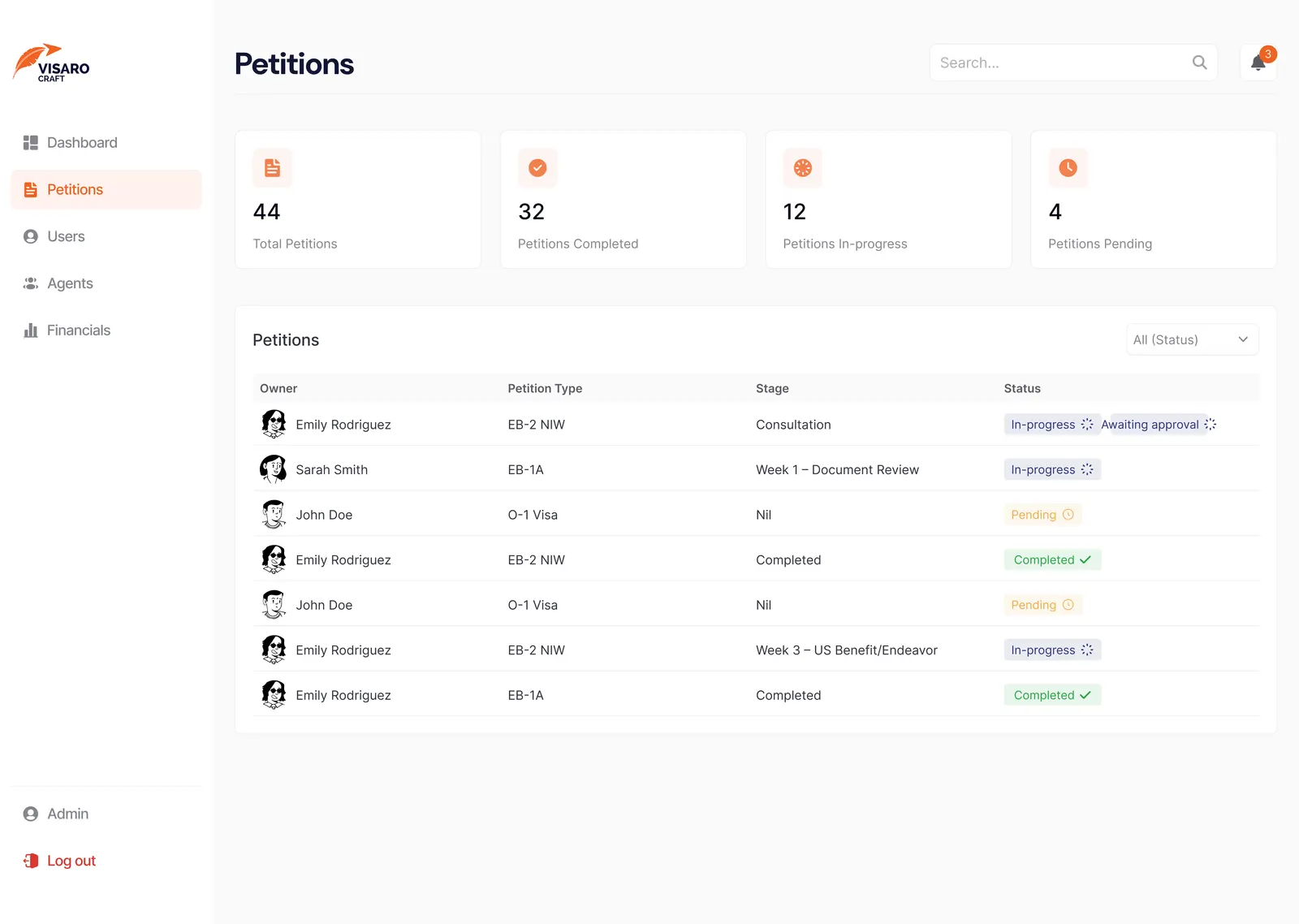
Rather than treat every visa category the same, the dashboard is built around the shape of a petition itself: milestones, documents, and deadlines specific to EB1A, EB2-NIW, or O1 cases. Applicants get a clear view of where their case stands — what's completed, what's pending, what's needed next — instead of waiting on status updates. Agents get the inverse view: a workspace for managing multiple cases at once, tracking payments, referrals, and consultation scheduling without losing sight of any single client.
The Process
The build started from the two core user journeys — applicant and agent — and worked outward from there, mapping each step of a petition's lifecycle to a screen: intake, document review, consultation booking, filing, and case resolution. Shared components (status badges, progress trackers, document cards) were built once and reused across both portals, so the two experiences stay visually and functionally consistent even though the underlying permissions and data differ.
Lessons Learned
Designing for two distinct user roles inside one product surfaced a lot of edge cases that a single-user dashboard never would have — the same case data needed to read completely differently depending on who was looking at it. It reinforced how much a well-structured, reusable component system pays off once a product has more than one type of user to serve, and how much clarity matters in a domain like immigration, where the stakes for the person on the other end of the screen are genuinely high.
Ready to build
something great?
Let's turn your idea into a fast, polished product from the first line of code to the final deploy.
Open to full-time roles and new freelance projects.
© 2026 Olaseni Disu
built with care, shipped with intent.